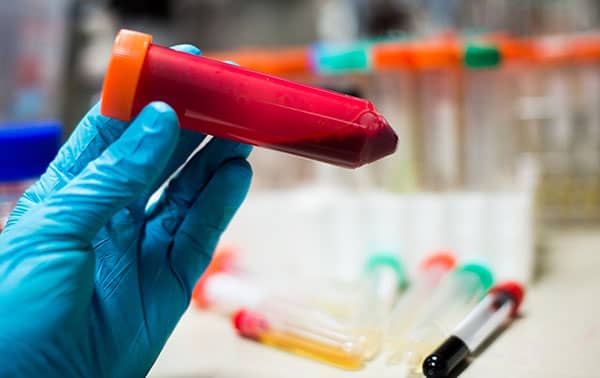
Chimerism occurs when a person’s body contains two different sets of DNA. After an allogeneic hematopoietic cell transplantation (HCT), the presence of both donor and recipient cells in the transplant recipient can be evaluated following the procedure. This evaluation can be used to monitor engraftment success, immune reconstitution, and risk of relapse or graft failure.
Versiti Diagnostic Labs offers sophisticated chimerism testing for post-transplant patients, including those who received solid organ transplantation, bone marrow transplantation and cellular therapy treatments.
Monitor hematopoietic reconstitution following allogenic bone marrow transplantation
Monitor effects of post-transplant therapies
Monitor for potential disease relapse
Monitor outcomes of allogeneic cellular therapies
Measure chimerism in cellular subpopulations
Identify the presence of maternal cells in newborns (e.g. SCID patients)
Chimerism by Next Generation Sequencing (NGS) Testing
Versiti’s Chimerism by NGS testing takes advantage of hundreds of single nucleotide polymorphisms (SNPs) found on all human autosomes (aka chromosomes) as well as the high data output of next generation sequencing (NGS) to provide sensitive and reliable results to monitor the relative amounts of recipient and donor cells present post-transplant. In technical validation studies NGS based chimerism testing has been found to provide more sensitive results and earlier detection of mixed chimerism in post-transplant monitoring compared to STR/VNTR based assays.
Test Method
Chimerism testing is performed using 202 biallelic SNPs across 22 autosomes that are used to uniquely identify recipient and donor cells in the sample. PCR amplification and next generation sequencing is performed and analysis of the informative markers identified in pre-transplant samples enables relative quantification of recipient and donor cells.
This test is performed in two parts:
Pre-transplant Analysis determines which markers can be used to uniquely identify recipient and donor alleles.
Post-transplant Analysis establishes relative amounts of recipient and donor DNA.
More than 30 years of chimerism test experience in post-transplant monitoring and cell therapy
Four-day testing turnaround time with low limit of detection
Chimerism testing on cell enrichment types CD3, CD19, CD33, CD56
We support our transplant partners by helping to monitor the relative amounts of recipient and donor cells after transplantation. Important clinical events in allogenic bone marrow transplantation, such as engraftment, relapse and the effects of post-transplant therapies can be monitored on a molecular level by using inherent genetic differences between recipients and donors.
Versiti Diagnostic Labs’ genetic chimerism testing has proven reliability, demonstrated by consistent, accurate, and precise performance in proficiency testing programs.
Enriched Cell Populations
Enriched cell populations can also be used to monitor patients following hematopoietic stem cell transplant for more precise detection of changes in transplant dynamics. Testing for the following cell subtypes is available:
Cell Marker
Cell Subset
CD3
T cells
CD19
B cells
CD33 (incl. CD66b)
Myeloid cells
CD56
Natural Killer cells
RelatedInformation
Z Diagnostic Laboratories
Diagnostic laboratory services including HLA testing, donor testing, immunohematology reference lab testing, hematology testing and more.
Z Our Investigators
Browse our Investigators, Emeritus Investigators, and other members of the Blood Research Institute.
Z HLA Loss of Heterozygosity
Versiti Diagnostic Labs’ Histocompatibility laboratory conducts an HLA loss of heterozygosity evaluation for post-transplant relapse patients.
Z Human Leukocyte Antigen (HLA) Typing
Versiti Diagnostic Labs’ Histocompatibility Lab provides human leukocyte antigen (HLA) typing for solid organ transplant and HCT patients.
We use cookies on our website to give you the most relevant experience by remembering your preferences and repeat visits. By clicking ACCEPT, you consent to the use of all the cookies.