

Explore our service lines

Lewis Bowman

“You have the ability to help an absolute, complete stranger. You can end up helping that person, and that becomes your legacy.”
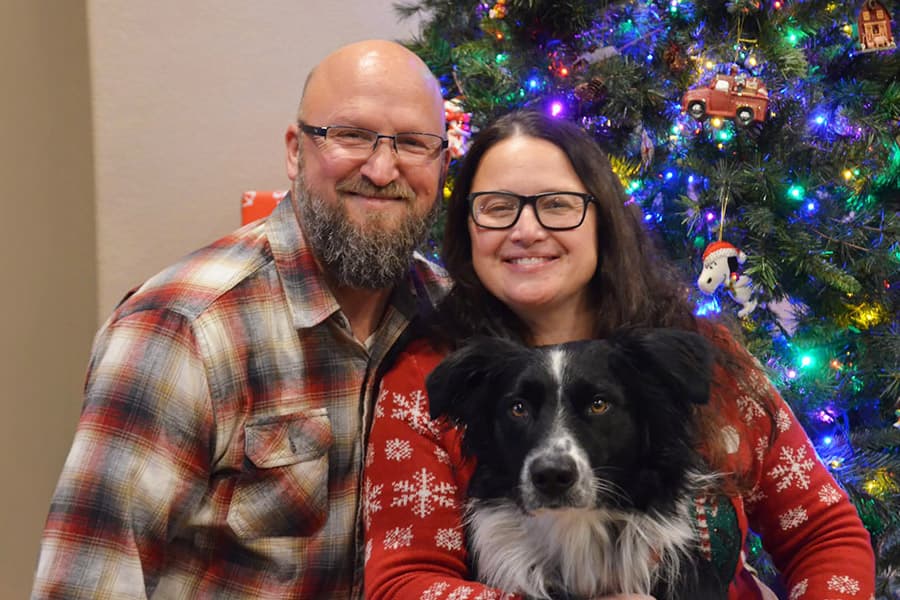
Lewis Bowman

Kathy and Lewis Bowman were White Lake Booster Club members for almost 20 years. On the first Saturday of July, the club always hosts a Fourth of July fundraiser, where Lewis would grill hundreds of burgers, brats, and hot dogs.

“Lewis would get there early in the morning and start grilling,” Kathy said. “It would be an all-day thing. We wouldn’t leave until after the fireworks.”

Practically the whole Village of White Lake would show up, and everyone who did was likely to meet the ever-reliable Lewis. After Lewis passed in 2024, the annual fundraiser didn’t quite feel the same. Still, there’s a Bowman at the grill.

“Now my brothers-in-law and our sons are down there grilling for him,” Kathy said.

Lewis’s legacy lives on through his friends, loved ones, and the memories he left behind, from family vacations and coaching his kids to golfing with his nephews. And while Lewis can no longer man the grill or drop everything to help a neighbor in need, he found one final way to give. Lewis was an organ and tissue donor. 

A Difficult Diagnosis

In mid-July 2024, Lewis went in for an MRI after dealing with persistent headaches.

“They were nothing crazy serious,” Kathy said. “If he took some ibuprofen, the headaches would go away.”

Within a few hours of the scan, the Bowmans received the results. The scan revealed a mass in his ventricle.

“Things moved at a pretty rapid pace after that,” Kathy recalled. “We were referred to UW surgery. The surgery was scheduled two weeks after we found out.”

True to form, Lewis did not allow this difficult diagnosis to define him. He and Kathy shared the news with their family, and then Lewis chose to focus on what mattered most to him.

“The weekend before surgery was our county fair,” Kathy said. “[Lewis] took that time to really connect with people. You see so many people throughout the fair. He spent time connecting and having conversations.”

An avid golfer, Lewis also made time to hit the links with his nephews and son.

“That Saturday, he went golfing with all of our nephews,” Kathy said. “One of them had never golfed before, and Lewis said, ‘You just come along. ’ ”

Lewis’s nephews still talk about that memorable day.

The First Surgery

The following weekend, Lewis had his surgery, and when he woke, there was only one person he wanted to see: Kathy.

“I went back there, and he was so happy,” she recalled. “You have this intense fear that you’re not going to wake up, and he was just so happy. He said, ‘I love you so much.’”

After a visit with their sons, a sense of contentment filled the room. “[Lewis] was resting,” Kathy said. “He ate, and everything had gone well.”

Unexpected Complications

A few hours later, things took a turn for the worse. Lewis developed a large blood clot and was immediately sent back to surgery. Unfortunately, more complications followed.

“He started to experience brain swelling,” Kathy said. “They took him back into surgery and removed part of his skull.”

It was after the third and final surgery that the doctors came to the unfortunate conclusion that Lewis would not survive.

“They performed the MRI,” she said. “The results showed a significant brain shift, which had resulted in irrevocable damage.”

A Decision Already Made

Once it became clear that Lewis would not survive, another difficult discussion arose: organ and tissue donation. However, even after enduring the unthinkable, Kathy knew what her high school sweetheart had wanted.

Kathy, a longtime nurse, had attended a local organ and tissue donation event at her workplace.

“They shared a new website for registering to become an organ and tissue donor,” Kathy said. She became a donor that day. Lewis quickly followed suit.

When she asked Lewis if he’d want to be a donor, Lewis answered with his trademark dry sense of humor. “Yeah, what do I care? I won’t need them anymore.”

Kathy wasn’t surprised by Lewis’s decision. He was already a regular blood donor in part due to his rare blood type.

“He was a ‘Braggy McBraggerson’ about that rare blood type,” she laughed. “He talked about it all the time. He’d say, ‘I am AB negative; I’m rare.’ It was hysterical.”

On Aug. 5, Lewis was declared brain dead. Two days later, the donation took place. Kathy will never forget that day.

“The hallways were lined with hospital workers,” Kathy said. “Our family walked behind Lewis as we went up to the helipad at UW. They loaded him onto the helicopter. We said our goodbyes, and I watched him leave in the bluest sky.”

Lewis’s Legacy

Thanks to Lewis, two people received the gift of sight. Kathy also recently received a card from a kidney recipient, a grandmother who was grateful for more time with her grandchildren. And these are just the recipients Kathy knows about. Many others also benefited from Lewis’s donation.

Lewis’s decision to donate set off a butterfly effect. All of Kathy’s nieces and nephews are blood donors. Two of them participate in their local National Honor Society’s annual blood drive.

“Lewis really instilled in our kids and our nieces and nephews the importance of asking, How can you give back? How can you make a difference? How can you help someone?”

To those considering organ and tissue donation, Kathy had this to say: “You have the ability to help someone else—a complete stranger. An absolute, complete stranger. You can end up helping that person, and that becomes your legacy.”


Every 10 minutes, someone is added to the organ transplant waiting list.

Approximately 113,000 men, women, and children are waiting for life-saving organ transplants. One organ donor has the power to save up to eight lives and change the outcomes of someone’s world forever by giving them a second chance. Additionally, tissue donation can save and improve the lives of up to 75 people with their gifts. You can make a huge impact by registering as an organ and tissue donor.

Learn more about organ and tissue donation, or register as a donor at https://donatelifewisconsin.org.


Impact Stories | Organ & Tissue Donation


Annette Washington

At just 20 years old, Robert’s life was tragically cut short when he was shot by his father. His mother, Annette, honored his wishes and donated his bone, skin, tendons, ligaments and veins so that he could improve the lives of others.
 

Chad Knauer

After losing his life in a tragic accident, Chad donated his tissues to heal more than 300 patients in need.
 

Gia Danninger

Gia was diagnosed with aplastic anemia at 5 years old and received blood transfusions to prepare her body for a bone marrow transplant. Now 11, she’s doing well and her mother, Jenna, is grateful to everyone who helped her daughter.
 

Tracy Tenpenny

After Tracy experienced a devastating cardiac arrest, his family made the courageous decision to donate his organs, tissues and corneas.